

If you have not read the earlier articles of What is Tantra? series, here is a brief overview of what was covered:
We examined the foundational meaning of Tantra Shastra and addressed common misconceptions surrounding it. We explored its scriptural status as the Fifth Veda (Panchama Veda) and explained the relationship within the sacred triad of Mantra (the principle), Tantra (the process/method), and Yantra (the medium) through the simple working example (camera).
Read Part 1: https://bhavambhavaani.com/what-is-tantra/
We discussed the vast literature of the Agamas across the Shaiva, Shakta, and Vaishnava traditions. We looked at the four structural pillars of the Shastra (Jnana, Yoga, Kriya, and Charya) and showed how ordinary remedial rituals—such as the Mahamrityunjaya Anushthana, Bagalamukhi Puja, and temple consecrations—are directly rooted in applied Tantric procedures.
Read Part 2: https://bhavambhavaani.com/what-is-tantra-part-2/
==============================
Tantra is a double-edged Sword!

Daivādhīnaṁ jagatsarvaṁ mantrādhīnāśca devatāḥ |
Te mantrā brāhmaṇādhīnāḥ tasmād brāhmaṇadaivatam ||
(Vashishtha Smriti / Hitopadesha)
“The entire cosmos is governed by the Devas; the Devas are bound by Mantras; and those Mantras are commanded by the Brahmana.”
This ancient aphorism reveals the most guarded, startling principle of Sanatana Dharma: the cosmic energies that administer our universe do not act arbitrarily—they are bound to deterministic acoustic laws. While the Supreme Almighty (Parabrahma / Paramatma) can never be coerced or subjected to human ego, the administrative forces of nature (Devatas) are structurally compelled to respond when an exact acoustic frequency (Mantra) is struck with flawless ritual precision (Vidhi).
In Parts 1 and 2, we uncovered the majesty of Tantra Shastra: its status as the sacred Fifth Veda, its vast textual ocean across the Agamas, and its role as the high-precision operating engine running every temple altar and domestic remedial anushthana.
Yet, to understand Tantra completely, one must confront its sharpest, most sobering truth: Tantra is a double-edged Sword.
In the path of pure devotion (Bhakti), a devotee surrenders with love (Sharanagati). The Divine responds out of boundless grace, showering mercy when the soul is ready. Tantra, however, operates on an entirely different mechanism: compulsion and deterministic leverage (Hatha). Through an uncompromising alignment of sound vibration (Mantra), consecrated geometry (Yantra), and exact procedural mechanics (Vidhi), the practitioner binds and compels cosmic forces to deliver an exact outcome.
Where there is compulsion, there is no selfless love (Prema). It is an intense, transactional exchange of vital energy and tapasya for a targeted result. For this reason, ancient masters warned that utilizing Tantra for worldly coercion, ego, or material desire (Kamya Karma) does not liberate the soul; it binds the practitioner tighter to the wheel of karmic consequence. And when attempted without an authentic Guru or executed with procedural flaws (Karma-Vaigunya), the unleashed force does not merely dissipate, it strikes back with reverse or more dangerous outcomes.
When the Gods Are Compelled: Shri Gautama Rishi and Lord Ganesha
(Reference: Shiva Purana, Koti Rudra Samhita, Chapters 24–27 — Gautameshvara Jyotirlinga Mahatmya)
The scriptures illustrate that when Tantric methodology is applied with absolute procedural accuracy, it can compel even the most benevolent deities to act against their gentle nature:
- During a catastrophic, multi-year drought, Sage Gautama undertook intense penance to propitiate Varuna Deva, securing an inexhaustible water reservoir and granary. He selflessly hosted and fed thousands of starving rishis, scholars, and their families.
- Over time, jealousy poisoned the minds of some contemporary Brahmins residing in his ashram. Resenting Gautama’s towering spiritual stature, they resolved to ruin him.
- Instead of ordinary malice, they turned to esoteric ritual compulsion: performing an exacting anushthana to invoke Lord Ganesha.
- Bound by the unyielding laws of the ritual’s exact Vidhi, Lord Ganesha was compelled to manifest. When the deity asked what they desired, the conspirators demanded: “Take the form of an emaciated, frail cow, wander into Gautama’s barley field, and let yourself die the moment he tries to gently shoo you away.”
- Ganesha explicitly warned them of the terrible karmic destruction such an act would bring upon them, yet the deterministic laws of the invocation forced the manifestation of the form. When Gautama lightly guided the frail cow away with a blade of grass, the illusory cow collapsed and died, casting the dreadful social blemish of Go-Hatya upon the innocent sage.

Though Sage Gautama’s pure devotion subsequently brought the descent of Mother Ganga (Godavari) to wash away the false blemish, this puranic history demonstrates an unsettling reality: Tantra does not evaluate morality. Like electricity, it simply obeys the operator’s technical execution.
Clashes of Cosmic Force: Historical Tantric Attacks
Because of its raw potency, history records dramatic confrontations where advanced practitioners deployed Tantric forces against spiritual luminaries:
The Agony of Goswami Tulsidas and the Birth of Hanuman Bahuk:
(Reference: Sri Ramcharitmanas historical traditions; Hanuman Bahuk commentary, Gita Press, Gorakhpur)
When Goswami Tulsidas composed the Ramcharitmanas in Awadhi (Language) making the divine pastimes of Bhagwan Rama accessible to the common person—hostile scholars in Varanasi deployed a destructive Aghora rite, directing fierce Bhairava entities to attack his physical frame. Tulsidas suffered an excruciating, burning agony across his arms and joints. Recognizing the occult assault, he did not turn to medicine. Instead, he invoked Sri Hanuman, composing the fiery verses of the Hanuman Bahuk. The divine presence of Hanuman dismantled the malevolent force, proving that selfless surrender dissolves weaponized occult energy.
The Occult Attack on Jagadguru Adi Shankaracharya:
(Reference: Madhaviya Shankara Digvijayam, Canto 15–16)
During his philosophical victory tour (Digvijaya) in Kamarupa (Assam)—the historic epicentre of Tantric sadhana—Adi Shankaracharya defeated the Shakta scholar Abhinavagupta in formal scriptural debate.
Unable to accept defeat, the bitter opponent deployed a lethal, weaponized occult rite (Abhichara Vidhi). Through this black-magic ritual, a severe, agonizing fistula disease (Bhagandara) was directed into Shankaracharya’s body, causing acute, hemorrhaging pain. True to his non-dual realization, the Jagadguru remained completely detached, treating the body as an illusory shell and refusing to seek medical treatment.
When physicians failed to diagnose the ailment, the celestial divine healers, the Ashvini Kumaras, revealed that the condition was not a biological pathology, but a targeted occult assault born of Abhichara. Discerning the malevolent nature of the curse, Shankaracharya’s devoted disciples performed intense counter-prayers and protective Vedic-Agamic mantras. The invoked divine power dismantled the weapon, and by the unyielding cosmic law of Pratighata (rebound), the lethal affliction turned back upon its sender, consuming Abhinavagupta in his own destructive karma.

The Noble Face of Tantra for Universal Protection
Tantra is not inherently dark or malicious. When wielded by selfless, realized masters, this exact science has acted as an impenetrable shield for society, spirituality, and national defense:
The 1962 India-China War and Datia Peeth’s 51-Kund Yajna:
(Reference: Historical records of Pitambara Peeth, Datia; contemporary national archives)
During the acute national crisis of the 1962 Sino-Indian War, when foreign forces advanced deep into Indian territory, revered saint Rashtra-Guru Swami Ji Maharaj of Pitambara Peeth (Datia) organized a massive, secret Tantric anushthana of Maa Bagalamukhi and Maa Dhumavati. Utilizing a 51-kund sacrificial arena (Yajnashala) with qualified initiates, intense oblations were offered to freeze the enemy’s aggressive intent (Stambhana). On the final day of the Purnahuti, China unexpectedly declared a unilateral ceasefire and withdrew its troops.

Chhatrapati Shivaji Maharaj and the Shakta Tantric Foundation of Swarajya
(Reference: Krishnaji Anant Sabhasad’s Sabhasad Bakhar; Chitnis Bakhar; records of the Samarth Ramdas Parampara)
The establishment of Hindavi Swarajya by Chhatrapati Shivaji Maharaj was not merely a triumph of military strategy and guerrilla tactics; it was grounded in rigorous esoteric sadhana and Shakti upasana. Shivaji Maharaj was a devout upasaka of Kuladevi Maa Tulja Bhavani, maintaining an unbroken tradition of Navaratri anushthanas and Shakta disciplines throughout his life.
Under the guidance of his Rajguru Samarth Ramdas Swami—who established hundreds of Maruti (Hanuman) temples to channel martial and pranic energy across the land—and qualified Shakta Tantric initiates, royal statecraft was married to spiritual discipline.
The consecration of weapons prior to battle was an established Agamic practice, governed by classical texts such as the Shastrapuja Vidhi and Kharga Puja found in Shakta Agamas. Popular lore often describes the legendary Bhavani Talwar as a miraculous gift from the Goddess. In the historical and Tantric tradition, this represents the culmination of intense Agamic consecration:
The weapon underwent rigorous Ayudha Sanskara—purification rites, nyasa of specific protective bijaksharas onto the blade, and the infusion of the fierce Chandi or Bhavani energy (Prana-Pratishtha).
Through these rites, the sword was treated not as mere steel, but as an empowered, consecrated instrument (Yantra) charged to uphold righteousness and protect Dharma.
Even prior to his historic 1674 coronation (Rajyabhisheka), historical records note that alongside the Vedic coronation led by Gaga Bhatt, a second, specialized Tantrik Rajyabhisheka was performed by the revered Shakta scholar Nischal Puri Goswami to harmonize subtle astral influences and invoke protective planetary and elemental shields over the newly founded empire.
This historic dimension proves that authentic Tantra was never confined to isolated cremation grounds or selfish sorcery. When aligned with noble intent, it was a rigorous, state-level spiritual science utilized by great rulers and rishis to defend society, secure justice, and establish righteous governance (Dharma Samsthapana).
For readers interested in how traditional wisdom addresses fear of esoteric forces and reveals the protective grace of devotion, this discourse by Pujya Sri Rajendra Das Ji Maharaj provides an authentic perspective on overcoming fear of tantra and occult disturbances through pure spiritual reliance. This video directly supports the theme of divine protection and the distinction between outward ritual leverage and inner faith.

Temple Consecration (Prana Pratishtha) Across Millennia:
(Reference: Agama Shastras — Kamika, Pancharatra, and Vaikhanasa Samhitas)
Every ancient temple standing today—from the grand gopurams of Tamil Nadu to the sanctums of Kashi and Puri, draws its spiritual longevity from Tantric Kriya and Charya Padas. Without Tantric consecration, a murti remains sculpted stone or metal; through precise Tantric science, it is transformed into a living, energetic vortex that heals, protects, and spiritually elevates generations of visitors.
The Grandeur of the Shastra and the Rarity of a True Guru
Beneath routine temple worship lies a separate, vast universe of Tantric Vidyas:
- The Dasha Mahavidyas: The ten cosmic wisdom forms (Kali, Tara, Tripurasundari, Bhuvaneshwari, Chhinnamasta, Bhairavi, Dhumavati, Bagalamukhi, Matangi, Kamala) represent concentrated cosmic frequencies. Canonical volumes like Mantramahodadhi, Kalyan Tantra-Anka, and Shaktapramoda detail specialized Nyasa, Kavacha, and Mudras designed to unlock specific spiritual and material capacities (Siddhis).
- The Tantric Pancha-Devatas: Ordinary devotees worship Shiva, Vishnu, Devi, Surya, and Ganesha through general devotional hymns. Yet Tantra Shastra preserves distinct, guarded esoteric methodologies for each (such as Ucchishta Ganapati, Aghora Sudarshana, or Nrisimha Kalpa) involving stringent psychic protections and secret seed syllables (Bija mantras).
The Risks of Backfire (Pratighata):
In higher Tantric sadhana, cosmic energy is compressed like a coiled steel spring. If an unauthorized individual—lacking moral grounding, mental stillness, and sensory control—attempts fierce rituals picked up from books or the internet, the current finds no ground. Any flaw in pronunciation (Svara), meter (Chhanda), or sequence (Krama) causes the force to rebound violently on the practitioner’s mental balance, lineage, and physical health.
Classical texts unequivocally declare that Tantric siddhi is strictly Guru-Gamya—attainable solely under the eye of an enlightened master who can absorb or redirect procedural anomalies. Such masters are exceptionally rare—as rare as the mythical Paras Stone (Philosopher’s Stone), which transforms iron into gold.

An Eyewitness Account: Pahari Baba and the Grace Beyond Tantra
(Reference: Discourse by Pujya Sri Rajendra Das Ji Maharaj: https://www.youtube.com/watch?v=oW3Kr_uPtqM)
Revered saint Pujya Sri Rajendra Das Ji Maharaj highlighted both the demanding rigor of Tantric discipline and the effortless supremacy of pure spiritual surrender through a personal eyewitness incident.
He explained that Sri Hanuman Ji is Himself the supreme master (Visharada) of all Mantra and Tantra Shastras. Sacred anushthanas such as the Ekamukha, Panchamukha, and Ekadasha Mukha Hanumat Kavacha are deeply anchored in precise Agamic methodology. His revered Gurudev, Pujya Pahari Baba Maharaj, once explained that if a seeker performs an uninterrupted 41-day anushthana of the Ekamukha Hanumat Kavacha—strictly observing celibacy (Brahmacharya), sleeping on the bare earth, maintaining total silence (Mauna), and avoiding human touch while sitting in contemplation before Hanuman Ji—their sight attains such blazing spiritual radiance (Tejasvita) that negative entities and occult disturbances cannot endure their gaze.
Yet, Maharaj Ji recounted a deeply moving event that occurred in Gwalior. A family brought their daughter-in-law, who was tormented by an unbearable, severe spirit affliction that had completely baffled every occult practitioner, talisman, and temple pilgrimage across the country. Weeping in distress, the family pleaded with Pahari Baba to perform an occult rite, exorcism, or counter-spell (Jhad-phook, Tantra-Mantra).
Pahari Baba simply smiled and said:
“I know nothing of your charms, totkas, or tantra-mantras. Just chant Ram-Ram! Keep chanting Ram-Ram!”
Moved by compassion, Baba addressed the entity troubling the woman. The spirit spoke through her, pleading: “We are already miserable and tormented in this spirit plane; please liberate us!” When Baba asked how it could be freed, the entity answered: “If I receive your foot-wash (Charanamrita), my soul will be redeemed.”
Baba signaled Sri Rajendra Das Ji, who washed Baba’s right toe in a small vessel and offered the sacred water to the woman. The instant she drank it, she collapsed to the ground, and the departing entity proclaimed with wonder that a divine aerial chariot (Vimana) had arrived to take it to Vaikuntha. Moments later, the woman regained consciousness, sitting up completely normal, healed, and at peace.
When Maharaj Ji later asked about this effortless resolution, Pahari Baba explained the ultimate distinction: while a rigorous 41-day Tantric Hanumat Kavacha discipline can grant such authority through intense personal labor, the simple shelter of the divine Name (Rama-Nama), the grace of a true Saint, and the sacred Charanamrita bestow that very deliverance instantaneously—free of risk, friction, or ritual complexity.

The Deeper Lesson: Why Grace Transcends Ritual Leverage
This eyewitness account reveals a profound distinction between esoteric mechanical force and pure spiritual refuge:
Strenuous Labor vs. Effortless Grace: Tantric discipline represents the path of intense personal effort (Purushartha), demanding flawless technical execution, extreme physical austerities, and unyielding psychological rigor just to build a protective shield. Surrender (Sharanagati), by contrast, rests entirely in the infinite compassion of the Divine—operating instantaneously without the friction of personal ego or strenuous physical struggle.
Suppression of Symptoms vs. Ultimate Liberation (Moksha): Conventional occult interventions often seek to threaten, bind, or aggressively crush a disturbing entity through ritual force. The saintly approach carried no violence: through the sacred Name and Charanamrita, the tormenting spirit was not merely driven away, but granted absolute redemption and passage to Vaikuntha. Where Tantra often manages symptoms, divine grace liberates the soul.
The Dissolution of Fear: Society frequently lives in dread of occult attacks, negative energies, and malevolent rites. This incident offers immediate reassurance: for a seeker anchored in the holy Name of the Almighty GOD, lower astral forces dissolve effortlessly. It stands as living proof that genuine Bhakti is not a compromise—it is the highest, safest, and most complete sanctuary in Kaliyuga.
The Ultimate Verdict: Why Sharanagati Surpasses Tantra in Kaliyuga
Tantra Shastra remains a magnificent testament to the scientific genius of our ancient rishis. They understood the subtle mechanics of nature, proving that energy, sound, and matter can be shaped through human will.
Yet, for a seeker aspiring for peace, liberation, and ultimate truth, our scriptures issue a compassionate, definitive verdict:
कलियुग केवल नाम अधारा, सुमिरि सुमिरि नर उतरहिं पारा।
(In Kaliyuga, the holy Name of the Divine is the sole, supreme refuge; by remembering it, one crosses the ocean of existence.)
Tantra is an intense path of self-effort, rigid ritualism, and hidden dangers. If a single step falters, your efforts crumble. Furthermore, using rituals to alter destiny (Prarabdha) or force outcomes often merely postpones the karmic debt, accumulating severe liabilities for future lifetimes.
In contrast, the path of Sharanagati (Total Surrender) and Nama-Japa carries zero liability:
- A child who attempts to climb a high-voltage transmission tower on their own risks electrocution. But a child who simply runs into their mother’s lap is lifted safely without any danger of falling.
- Tantra relies on human ego, calculation, and ritual leverage; Bhakti relies on the boundless compassion of the Divine.
- The holy Name requires no difficult Nyasa, no esoteric materials, and carries no curse of Pratighata. Even when chanted imperfectly, it bestows peace, dissolves karmic burdens, and leads the soul to supreme liberation (Moksha).
Tantra Shastra deserves our deepest intellectual reverence as a monumental sacred science. But when navigating the complexities of life and seeking eternal peace, lay aside the burden of ritual manipulation. Take shelter in the supreme refuge of Bhagwan Nama-Japa and unconditional Sharanagati—the simplest, safest, and most elevated path of Sanatana Dharma.

=====================
- Cosmic Principle of Devas & Mantras: Vashishtha Smriti / Hitopadesha (Daivādhīnaṁ jagatsarvaṁ mantrādhīnāśca devatāḥ…)
- Gautama Rishi & Lord Ganesha Episode: Shiva Purana, Koti Rudra Samhita, Chapters 24–27 (Gautameshvara Jyotirlinga Mahatmya)
- Goswami Tulsidas & The Occult Affliction: Historical traditions of Sri Ramcharitmanas; Hanuman Bahuk commentary (Gita Press, Gorakhpur)
- Adi Shankaracharya & Abhinavagupta Encounter: Madhaviya Shankara Digvijayam, Cantos 15–16
- Datia Peeth’s 1962 China War Yajna: Historical archives and publication records of Pitambara Peeth, Datia (Madhya Pradesh)
- Chhatrapati Shivaji Maharaj & Bhavani Upasana: Sabhasad Bakhar; historical records of the Samarth Ramdas Parampara
- Temple Consecration & Architecture (Prana Pratishtha): Classical Agama Shastras (Kamika Agama, Pancharatra Samhita, and Vaikhanasa Samhita)
- Dasha Mahavidya & Pancha-Devata Tantric Manuals: Mantramahodadhi, Kalyan Tantra-Anka, and Shaktapramoda
- Kaliyuga Nama-Mahatmya: Goswami Tulsidas, Sri Ramcharitmanas (Kaliyuga kevala nāma adhārā…)
- Pujya Sri Rajendra Das Ji Maharaj Discourse (Pahari Baba Eyewitness Account):
- https://www.youtube.com/watch?v=oW3Kr_uPtqM
- Know Your Dharm Series — Part 1 (Foundational Definitions & The Sacred Triad):
- https://bhavambhavaani.com/what-is-tantra/
- Know Your Dharm Series — Part 2 (The Literature of Agamas & Everyday Rituals):
- https://bhavambhavaani.com/what-is-tantra-part-2/
- Krishnaji Anant Sabhasad, Sabhasad Bakhar (1697); Govind Anant Kavi, Shivarajyabhisheka Kalpataru (documentation of the Sept 1674 Tantrik Rajyabhisheka under Nischal Puri Goswami).
- Jedhe Shakavali and Tuljapur royal Sanads (documentation of Kuladevi Tulja Bhavani Upasana).
- Shakta Agamic tradition: Sharadatilaka & Kalika Purana (Ayudha Puja & Shastra-Sanskara Vidhi).
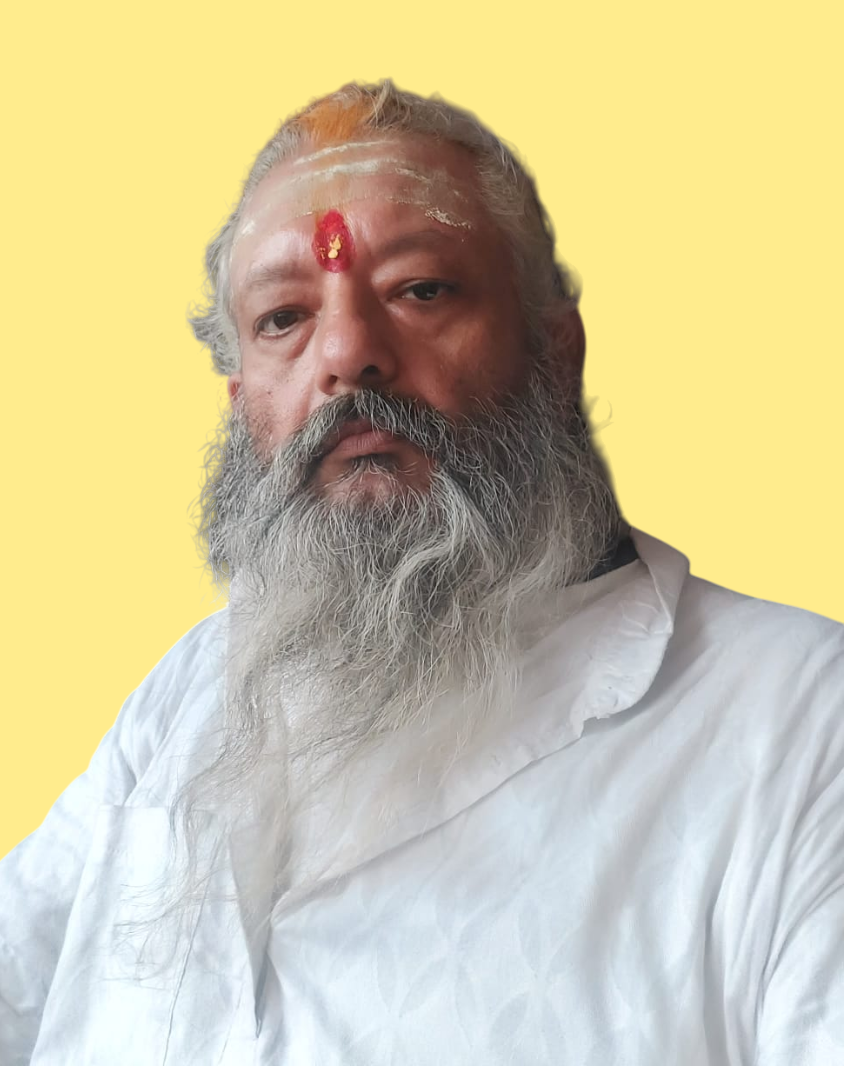
Anupam Trivedi has spent over three decades studying and reflecting upon Sanatan scriptures, including the Vedas, Upanisads, Itihāsa, and Purāṇas. He writes on cultural philosophy and ancient literature to present traditional insights with accuracy and clarity. Read full bio →
Pingback:What Is Tantra? Part 4: Mudras, Samputa and Yajna-Havana Connection with Tantra - Bhavam Bhavaani
Pingback:What is Tantra? Part 2: The Vast Literature of Tantras & Tantric Rituals
Pingback:What is Tantra? Part 5: panchmakar-secrets