
If you have not read Part -1 of This series please find the Link here – Rudraksha Facts in Shastra Part 1
In Part 1 we learned the origin of Rudraksha, its various types, the rules for wearing it and also the truth behind the fraud and misconceptions surrounding Rudraksha in the marketplace.
In Part 2 we will explore the warnings about wrong usage of Rudraksha, Mahatmya (Importance / Usefulness) of different Rudrakshas in adhyatmic field and in treatment of many illnesses and for overall health.
Warnings and Secret Tantric Revelations on Rudraksha You must not Miss (Ref: Yamal Tantra, Shiv Puran)
The Agam Rahasyam (a foundational text of Shaivagama and Yamala Tantra) and the Shiva Mahapurana reveal several esoteric (Guhya / Rahasyamayi) warnings and strict rules regarding Rudraksha that are completely unknown to the general public. Ignoring these hidden injunctions can render one’s spiritual efforts entirely fruitless or even invite severe adverse effects:
- The Infinite Potency of the Rudraksha Mala: While chanting on other sacred malas yields fixed, limited benefits—for example, a Putrajiva mala gives ten times the merit, a conch mala a hundred to a thousand times, coral a thousand to ten thousand times, a pearl mala a hundred thousand times (one lakh), a gold mala ten million times (one crore), and a Kusha grass knot a billion times (a hundred crores), mantra japa performed on a Rudraksha mala bestows infinite (Ananta) merit, surpassing all others and directly granting liberation (Mukti).
- The Strict Prohibition on Mahavidya Deities: Chanting the mantras of specific fierce Tantric deities – namely Goddess Kalika (Kali), Chhinnamasta, Tripura Sundari, and Tarini (Tara) – on a Rudraksha mala is strictly forbidden. The Agam Rahasyam warns that these goddesses are not pleased by Rudraksha japa, and attempting it causes chronic disease (Vyadhi) and renders the entire japa completely fruitless (Nishphala).
Kālikā Chinnamastā cha Tripurā Tāriṇī tathā। Etā rudrākṣamālāyā jape toṣaṁ na yānti hi॥
Etāsāṁ cha japaṁ mantrī rudrākṣamālayā charan। Vyādhim-āpnoti satataṁ niṣphalaṁ tasya taj-japaḥ॥ (Agam Rahasyam, 11.91–92)
- Daytime Restriction for Shakti Mantras: Chanting any Shakti/Devi mantra on a Rudraksha mala during the daytime is entirely fruitless (Nishphala). The esoteric (Guhya) reason provided in Tantra texts is that the divine union (Samayoga) of Shiva and Shakti is consecrated (Prakirtita / Sthapita) exclusively at night; therefore, combining the Rudraksha (which embodies Shiva-tattva) and the Devi mantra (which embodies Shakti-tattva) is only fruitful after sunset.
Divā naiva prajaptavyaṁ rudrākṣamālayā kvachit। Śaktimantraṁ maheśāni kṛte tan-niṣphalaṁ bhavet॥
Śivaśaktisamāyogo rātrāveva prakīrtitaḥ। Rudrākṣe śivarūpatvaṁ śaktitvaṁ śaktimantrake॥ (Agam Rahasyam, 11.93–94)
- Invalidation of Vedic Rituals Without Rudraksha: According to Yamala Tantra, any Vedic ritual, japa, or sacred fire ceremony (Homa) performed by a person who is not wearing a Rudraksha on their body becomes entirely fruitless (Nishphala) and devoid of spiritual merit.
Arudrākṣadharo bhūtvā yad yat karma cha vaidikam। Karoti japahomādi tat-sarvaṁ niṣphalaṁ bhavet॥ (Yamala Tantra / Agam Rahasyam, 18.140)
- The Severe Penalty of Wearing Without Consecration: The Shiva Mahapurana issues a stark warning that wearing a Rudraksha simply as fashion, without proper consecration (Pratishtha / Abhimantran), Mantra-Nyasa, Panchakshara Japa, or blessings by a Guru/Brahmana, invites severe consequences; such an individual falls into a terrible hell for the duration of the reigns of fourteen Indras.
Vinā mantreṇa yo dadyāt dhārayet tu naro bhuvi।
Sa yāti narakaṁ ghoraṁ yāvac-chaturdaśendra-sthitiḥ॥ (Shiva Mahapurana, Vidyeshvara Samhita, 25.62)
- Rudraaksha must not be burnt (in Cremation): According to revered saints like Puri Shankaracharya, a Rudraksha must never be burned. If a body is to undergo traditional cremation (Daha-Sanskara), the Rudraksha must be removed before lighting the pyre; it is only left on the body during water burial (Jala-Samadhi) or earth burial (Bhu-Samadhi).
- The Sin of Premature Plucking: While naturally small beads (Gunja size) are highly potent, plucking naturally large Rudraksha beads prematurely (Kachha / Apakva) from the tree to sell them as “miniature” beads is considered a grave transgression and strictly prohibited (Varjita / Nishiddha) in the Shastras.
- The Ten-Million Multiplier of a 27-Bead Mala: While a full chanting mala consists of 108 beads, simply keeping a compact 27-bead Rudraksha mala on the body causes the spiritual merit of any righteous act performed by that person to instantly multiply by ten million (a crore-fold / Koti-guna).
Saptaviṁśatirudrākṣamālayā dehasaṁsthayā। Yaḥ karoti naraḥ puṇyaṁ sarvaṁ koṭiguṇaṁ bhavet॥ (Agam Rahasyam, 18.149)
- The Sacred Merit of Gifting Rudraksha: Donating an authentic Rudraksha to a Brahmana or spiritual seeker pleases Lord Rudra so profoundly that He directly bestows His own divine realm (Rudra-Pada) upon the giver.
Yo dadāti dvijātibhyo rudrākṣaṁ bhuvi ṣaṇmukha।
Tasya prīto bhaved rudraḥ prayacchati nijaṁ padam॥ (Agam Rahasyam, 18.160)
Different Rudraksha’s and their Mahatmya
We have many sacred articles in Sanatan Dharm tradition Shaligram, Shankhs (Dakshinavarti Shankh), Kusha Grass, Durva Grass, Tulsi, and Rudraksha is one among them. Each such Sacred article is the favourite of different Panch Devatas, such as Tusi is very dear to Shri Hari Vishnu (hence offered to Shaligram, Ramji & Shri Krishna and also Shankha), Durva Grass is extremely dear to Shri Ganesha Similarly Rudraksha is extremely Dear to Bhagvan Shiva.
Unlike Durva which is not offered to Durga Ji, and Tulsi Leaves not Offered to Shiv Ji, Rudraksha does not have any such prohibitions as per shastra. Rudraksha’s are dear to all devata’s, shri Hari Vishnu’s devotees wear Rudraksha along with Tulsi Mala, all Rishi, Muni, Devata’s also wear Rudraksha.
Original Rudraksha Beads have Immense power, and they undoubtedly give results as prescribed in Shastra provided one follows the procedure for use as per shastra.
We will in this part 2 of Rudraksha Facts in Shastra know about each Rudraksha Benefits, Method of worship / wearing / use and also do’s & don’ts.
1 – 14 Mukhi Rudraksha’s
How the Mukh (Faces) Are Counted
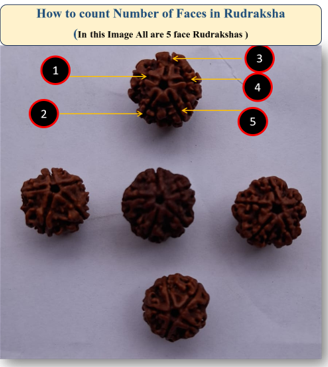
The “Mukh” (face) of a Rudraksha refers to the natural vertical lines or deep clefts (Rekhas) that run along the outer surface of the bead, extending continuously from the upper opening (the stem point) to the bottom opening. Each distinct, unbroken segment demarcated between these natural grooves is counted as one face or Mukh.
The Rudraksha Jabalopanishad (Verse 45) reveals the divine anatomy residing within the structure of every single bead:
- The Base / Root (Mula): Abode of Bhagwan Brahma.
- The Internal Canal / Stem (Naala): Abode of Bhagwan Vishnu.
- The Lines / Faces (Mukha): Abode of Bhagwan Rudra (Shiva).
- The Natural Thorn-like Projections (Bindus / Kantaka): Abode of all celestial deities (Sarva Devatas).
A genuine bead possesses natural, clearly raised ridges and elevations along these dividing lines. Beads that have artificially carved lines, lines etched with sharp tools, or flattened surfaces without genuine natural partitions are considered fraudulent and are strictly prohibited in the Shastras.
Another Fact about Rudraksha is Like our finger prints every Rudraksha is unique, no two Rudraksha are exactly similar.
1 to 14 Mukhi Rudraksha : Scriptural Mahatmya & Uses
One-Mukhi (1-Mukhi) Rudraksha: Scriptural Significance
Embodying Param Shiva and the absolute supreme reality (Param-Tattva), the 1-Mukhi bead is governed by the radiant cosmic energy of the Sun God (Surya). The Rudraksha Jabalopanishad reveals that by wearing it with disciplined control over the senses (Vijitendriyah), a seeker’s individual consciousness merges directly into the Supreme Reality (Pare Tattve Leeyate). Classical Shastras state that merely beholding an authentic 1-Mukhi (Darshan) remits the grave karmic burden of Brahma-hatya, while consecrating and worshipping it on an altar ensures the permanent presence of Goddess Lakshmi, dissolving all family misfortune.
On a therapeutic and psychological level, its solar resonance calms chronic migraines, ophthalmic strain, and hepatic imbalances. By infusing the wearer with immense willpower, clarity, and mental stability, it is widely revered for helping break chronic addictions, including substance abuse, tobacco, alcohol, and obsessive behavioral patterns. It is particularly beneficial for institutional heads, administrators, and seekers cultivating detachment (Vairagya).
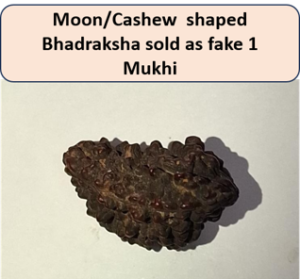
A Critical Note on Authenticity: Naturally round, independent single-faced beads do not fall from Himalayan trees. Seekers must remain vigilant against the overwhelming commercial market fraud (estimated above 95%), which predominantly peddles flat cashew-shaped seeds (Bhadraksha / Elaeocarpus tuberculatus) or artificially carved round fakes that carry no scriptural potency.
Two-Mukhi (2-Mukhi) Rudraksha: The Harmony of Shiva-Shakti & Marital Equilibrium
Manifesting as Dev-Deveshwara or Ardhanarishwara – the unified presence of Bhagwan Shiva and Mata Parvati—this bead is governed by the soothing lunar vibrations of the Moon (Chandra). Sacred texts record that wearing it constantly invokes the grace and loving benevolence of Ardhanarishwara (Priyate Tasya Nityashah), while instantly destroying the deep karmic guilt of cow-slaughter (Go-vadha). The Padma Purana adds that it carries the blessings of the sacred fire, rewarding the wearer with the spiritual merit of daily Agnihotra rituals.
Psychologically and relationally, it serves as the ultimate Shastric remedy for domestic and interpersonal discord. It pacifies the emotional turbulence, mood swings, and anxiety caused by an afflicted Moon. It is especially prescribed for resolving deep-seated marital friction, removing obstacles in finalizing marriage alliances, restoring trust between partners, and assisting childless couples seeking healthy conception.
Three-Mukhi (3-Mukhi) Rudraksha: The Purifying Flame & Destruction of Past Karma
Representing the sacred triad of Vedic fires (Agni-Traya: Garhapatya, Ahavaniya, and Dakshinagni) and the Fire God (Lord Agni), the 3-Mukhi bead is ruled by the fiery energy of Mars (Mangala). Just as an intense flame consumes dry fuel without taking on its impurities, this bead burns away the accumulated karmic debris of three consecutive lifetimes (Tri-Janmottha Papa-Rashi). The Shrimad Devi Bhagavata Purana notes that it remits sins of moral errors and female injury (Stree-vadha), while the Padma Purana extols it as the foundation of higher learning (Sarva-Vidya Pratishtha).
Therapeutically, it dissolves chronic lethargy, inferiority complexes, depression, and deep-seated guilt. It purifies the blood, aids digestive disorders, regulates blood pressure, and calms persistent fevers. A single bead (or a set of three) worn around the neck is traditionally prescribed for weak or sickly children suffering from recurrent low immunity and fevers.
Four-Mukhi (4-Mukhi) Rudraksha: Creative Intellect, Eloquence & Mental Clarity
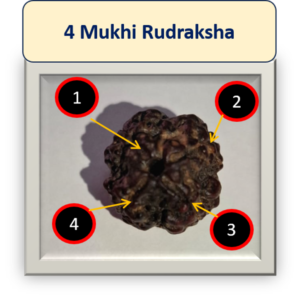
Presided over by the four-faced creator Chaturvaktra (Bhagwan Brahma) and blessed by Devi Saraswati, the 4-Mukhi bead is aligned with Mercury (Budha). It awakens creative intelligence, mental equilibrium, and persuasive speech, systematically guiding the wearer toward the fulfillment of the four goals of human life (Dharma, Artha, Kama, and Moksha). Scripturally, it absolves the severe karmic weight of homicide (Nara-hatya) and spiritual transgressions.
It is uniquely suited for students, educators, researchers, writers, and public speakers seeking sharp focus and retentive memory. Physically, it aids neurological stability, relieves speech impediments like stammering, and supports respiratory and gallbladder health. When strung with two 4-Mukhi beads and one 6-Mukhi bead, it forms the traditional Saraswati Bandha combination for academic excellence.
Five-Mukhi (5-Mukhi) Rudraksha: Universal Liberation & Cardiovascular Wellness
Embodying Pancha-Brahma (the five aspects of Shiva: Sadyojata, Vamadeva, Aghora, Tatpurusha, and Ishana) as Kalagni Rudra, this bead is governed by the expansive wisdom of Jupiter (Brihaspati). Celebrated in the Shastras as Sarva-Muktiprada (the bestower of comprehensive liberation), it destroys the sins of unscriptural deeds and the consumption of forbidden food (Abhakshya-bhakshana). Wearing large, authentic 5-Mukhi beads is believed to safeguard the pure-hearted devotee from untimely, accidental death (Apamrityu).
As the most natural and abundant formation, it forms the core of classical 108-bead Japa malas and daily protective neckpieces. In traditional health practices, it stabilizes blood pressure, regulates heart rhythms, supports metabolic balance in diabetes, and soothes kidney distress.
Six-Mukhi (6-Mukhi) Rudraksha: Heroic Willpower, Discernment & Oratory Power
Dedicated to Lord Kartikeya (Skanda), the 6-Mukhi bead is governed by Venus (Shukra). The Rudraksha Jabalopanishad states that wearing it confers immense prosperity (Maha-Shrih), radiant health (Mahad-Aarogyam Uttamam), and refined discernment (Mati-Vijnana-Shuddhi). Agam Rahasyam highlights its unique power to absolve the grave karmic sin of embryo destruction or abortion (Garbha-hatya).
Worn upon the right arm, wrist, or neck, it awakens inner courage, physical stamina, and sharp analytical ability. It supports vocal clarity, eye health, and reproductive vitality while assisting individuals in overcoming stammering and nervousness during public discourse. It is highly recommended for leaders, trial attorneys, performers, and decision-makers.
Seven-Mukhi (7-Mukhi) Rudraksha: Eradication of Poverty & Saturnine Peace
Sacred to the Sapta-Matrikas (Seven Divine Mothers), the Saptarshis (Seven Celestial Sages), and Ananta (The Infinite Serpent), this bead is governed by Saturn (Shani). It is widely celebrated across the Puranas as the absolute destroyer of chronic poverty (Daridrata-Nashaka). The Padma Purana notes that sovereign serpents dwell within its clefts, shielding the wearer from poisons, deceit, and sudden financial collapse. Agam Rahasyam confirms that it absolves the severe karmic debt of gold theft (Svarna-steya).
By attracting the enduring grace of Goddess Mahalakshmi, it stabilizes family assets and unlocks career growth. It is the premier bead for pacifying the malefic trials of Saturn (such as Shani Sade-Sati and Dhaiya), while offering physical relief from chronic joint pain, arthritis, muscular atrophy, and bone disorders.
Eight-Mukhi (8-Mukhi) Rudraksha: Removal of Obstacles & Freedom from Deceit
Representing Lord Ganesha (Vighnaharta), the Ashta Vasus, the Ashta-Matrikas, and Mother Ganga, the 8-Mukhi bead is ruled by Rahu. The Jabalopanishad notes that when worn by a truthful practitioner (Satyavadinah), the divine Vasus and Ganga bestow continuous protective grace. Agam Rahasyam records that it uniquely cleanses the sin of spoken untruths and deceit (Sarva-Anrita Vinashaka), while ensuring full longevity (Purnayu) and immunity from unexpected catastrophes.
It systematically dissolves recurring hindrances in business and career, sharpening critical analysis and writing abilities. It neutralizes Rahu-induced paranoia, sudden losses, and mental confusion, while supporting the prostate, gallbladder, and central nervous system. It is often paired with the 7-Mukhi bead for complete financial and obstacle protection.
Nine-Mukhi (9-Mukhi) Rudraksha: Navdurga Shakti & Fearless Sovereignty
Infused with the collective power of the Nava-Shaktis (Nine Manifestations of Goddess Durga) and Lord Bhairava, this bead is governed by Ketu. The Jabalopanishad declares that merely viewing or wearing it pleases all Nine Divine Shaktis. The Padma Purana notes that it burns internal impurities with the fire of spiritual wisdom and ultimately grants direct liberation into Shiva’s realm (Shiva-Sayujya).
Worn upon the left arm, wrist, or neck, it provides fierce protective energy, shielding against premature death (Kala-Bhaya) and neutralizing malefic Ketu influences. It dispels phobias, deep anxieties, night terrors, and psychic attacks. Homemakers and professional women frequently wear it to maintain energetic vitality and protect the domestic space.
Ten-Mukhi (10-Mukhi) Rudraksha: The Universal Shield & Absolute Peace
Embodying Lord Janardana (Bhagwan Mahavishnu), Lord Yama, and the Ten Digpalas (Guardians of the Directions), the 10-Mukhi bead operates beyond the influence of the nine astrological planets as an impenetrable cosmic shield. The Jabalopanishad explains that its sight brings profound inner tranquility (Shanti-Janakam), while Agam Rahasyam highlights its power to banish evil spirits, ghosts, and malevolent entities (Bhuta-Preta-Pishacha-Haa).
It neutralizes black magic, the evil eye (Nazar), chronic insomnia, and nightmares. It assists in resolving protracted legal disputes, workplace hostility, and deep Vastu faults in buildings. By harmonizing Vaishnava and Shaiva energies, it helps ground unstable or directionless individuals, providing clear career focus.
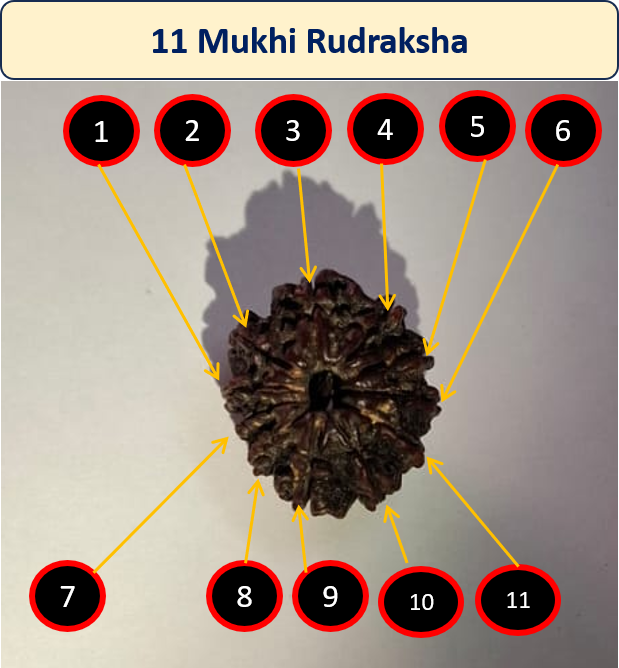
Eleven-Mukhi (11-Mukhi) Rudraksha: The Eleven Rudras & Sensory Mastery
Containing the combined potency of the Ekadasha Rudras (Eleven Rudras), Lord Hanuman, and Lord Indra, this bead is celebrated in the Jabalopanishad as the perpetual multiplier of fortune (Sadaa Saubhagya-Vardhanam). The Padma Purana states that wearing it yields the spiritual fruit of performing one thousand Ashvamedha sacrifices and gifting one lakh cows in charity.
It aids in mastering all eleven faculties (the five action senses, five perception senses, and the mind), cultivating physical stamina, negotiating acumen, and unwavering courage. Worn in the Shikha (crest-lock) or around the neck, it protects against severe physical accidents and trauma while aiding digestive, metabolic, and liver balance. It is widely used by practitioners of Hatha Yoga, Pranayama, and disciplined spiritual paths.
Twelve-Mukhi (12-Mukhi) Rudraksha: Solar Brilliance & Administrative Power
Sacred to the Dwadasha Adityas (Twelve Solar Deities) and Maha-Vishnu, this bead is governed directly by the Sun (Surya). It radiates solar authority, dispelling the fear of armed adversaries, wild beasts, and sudden downfall. Agam Rahasyam affirms that wearing it bestows the comprehensive spiritual merit of all Vedic fire rituals and sacrifices combined (Sarva-Kratu-Phalaprada).
Worn on the crown, hair, or neck, it imparts administrative dominance, personal magnetism, and resolute leadership. In traditional wellness, it corrects heart debility, chronic ocular issues, skin conditions, and bone weakness. Corporate leaders, physicians, administrators, and statesmen wear it to maintain authority and mental endurance.
Thirteen-Mukhi (13-Mukhi) Rudraksha: Kama-Siddhi & Mastery of the Arts
Presided over by Lord Kamadeva, the Vishwedevas, and Lord Indra, the 13-Mukhi bead is ruled by the refined energies of Venus and Kamadeva. The Rudraksha Jabalopanishad describes it as the fulfiller of righteous desires (Kaamadam), bestower of auspiciousness (Shubham), and grantor of the Eightfold Siddhis (Siddhidam). It grants mastery over Rasa-Rasayana (traditional alchemy, medicine, and wellness arts), while remitting karmic guilt regarding strained duties toward elders or mentors upon sincere repentance.
It cultivates charisma, eloquence, and artistic excellence, making it ideal for performers, marketing executives, and public negotiators. Therapeutically, it eases deep emotional apathy, hormonal fluctuations, and relationship estrangement.
Fourteen-Mukhi (14-Mukhi) Rudraksha: The Third Eye, Ancestral Elevation & Complete Health
Known as Rudra-Netra-Samudbhava (born directly from the third eye of Shiva) and Param Shiva (Lord Shrikantha), this bead governs the Ajna Chakra (The Brow Centre). The Rudraksha Jabalopanishad designates it as the ultimate destroyer of all diseases (Sarva-Vyadhi-Haram), securing radiant wellness (Sarvadaarogyam-Aapnuyaat). Uniquely, Agam Rahasyam notes that it elevates, purifies, and redeems the wearer’s entire ancestral lineage (Vamshoddharaka).
Worn upon the forehead between the eyebrows, on the crown, or around the neck, it awakens intuitive foresight, meditative clarity, and visionary planning. It is the ultimate protective shield against the severe trials of Shani Sade-Sati, dissolving physical and psychic afflictions while guiding the soul toward Shiva-hood.

Rare Natural Formations: Scriptural Reality vs. Commercial Hype
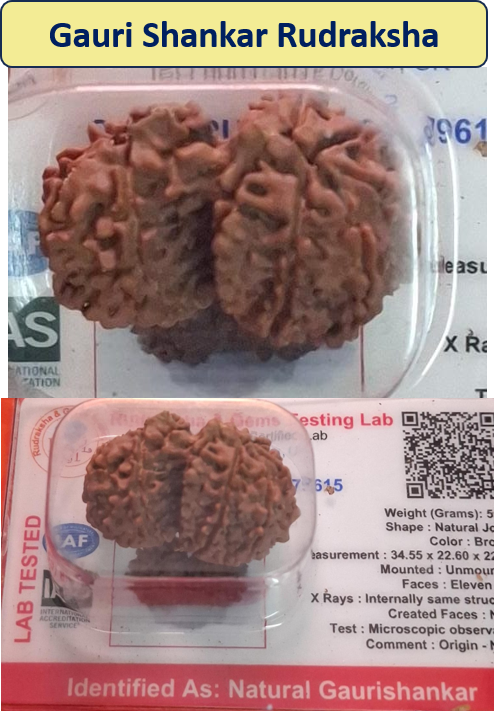
- Gauri-Shankar Rudraksha: Two naturally conjoined Rudraksha beads sharing a single outer crust. Scripturally identified as the unified embodiment of Bhagwan Shiva and Mata Parvati (Ardhanarishwara energy).
- Application: Recommended for marital harmony, overcoming delays in marriage, and fostering deep familial bonds.
- Warning: Sannyasis and celibates traditionally avoid wearing 32-bead Gauri-Shankar malas because the intense energy focuses primarily on household balance and creation. Commercial sellers often artificially glue two single beads together; check for an unbroken, seamless natural join.
- Garbha-Gauri Rudraksha: A natural formation where one joined bead is significantly smaller than the other (representing Mother Parvati and child Ganesha).
- Application: Worn traditionally by women for safe conception, protection of the embryo, and mother-child bonding.
- Sawar Rudraksha: A rare natural occurrence where a tiny 1-Mukhi bead is born riding naturally on top of a larger multi-faced host bead (e.g., 4 or 5 Mukhi).
- Authenticity Rule: It must be worshipped or worn intact as a single composite unit. Mechanically slicing or cutting the smaller bead off to falsely sell it as an independent “round 1-Mukhi” violates Shastric integrity and destroys the bead’s sanctity.
- Ganesha Rudraksha: Natural Trunk Formation & Removal of Obstacles
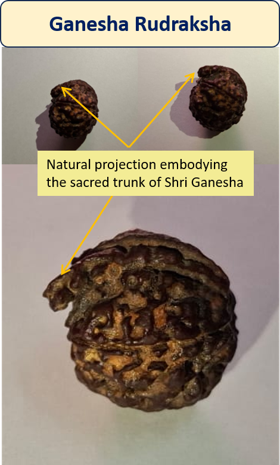
A distinct natural formation where a Rudraksha bead develops an elevated, trunk-like protrusion (Shunda) on its outer surface. It embodies the divine form and grace of Bhagwan Shri Ganesha (Vighnaharta).
Application & Benefits: Worn to eliminate recurring hurdles in education, career, and competitive pursuits. It enhances analytical intellect, memory, and writing prowess while ensuring auspicious beginnings for new ventures.
Authenticity Injunction: The trunk projection must be naturally grown and integral to the bead’s original crust. Commercial sellers often carve or glue a separate seed fragment onto a round bead; inspect closely to ensure there are no cut marks or artificial joints.
The Universal Rule of Mantra & Consecration
While various texts mention specific single-syllable Beej Mantras for each individual Mukhi, sacred tradition and the Shastras strictly prohibit taking or chanting uninitiated Beej Mantras directly from published books. Secret Beej Mantras carry immense energetic potency and are only effective and safe when transmitted orally by a qualified Guru (Guru-Mukha).
For householders, devotees, and general practitioners, the Shastras provide a universal, infallible method: Any authentic Rudraksha bead from 1 to 14 Mukhi can be duly purified, consecrated, and worn by chanting either the Shiva Panchakshara Mantra (Om Namah Shivaya) or the Maha Mrityunjaya Mantra.
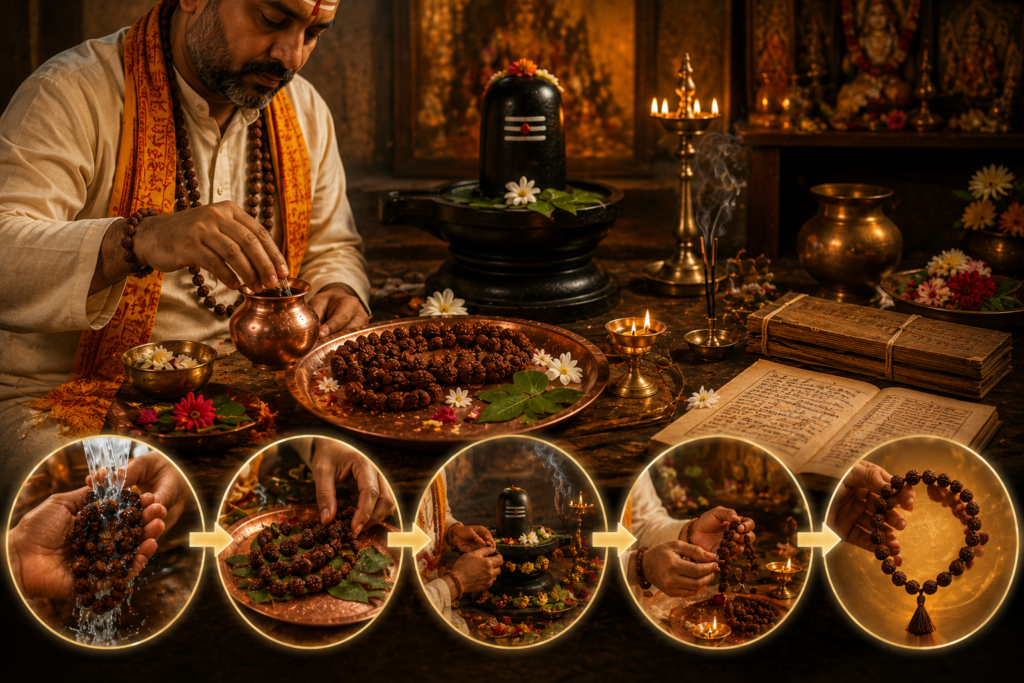
Step-by-Step Scriptural Consecration Before Wearing
A Rudraksha must never be worn directly from the marketplace without purification (Shuddhi) and consecration (Abhimantran):
- Purification (Snana): Wash the bead with clean water, followed by raw milk or Panchamrita (milk, curd, honey, ghee, sugar), and rinse again with pure water.
- Sanctification (Lepana): Gently dry the bead and apply natural white/red sandalwood paste (Chandan) and sacred ash (Bhasma / Vibhuti).
- Offering (Upachara): Place the bead before an image or Shiva Linga; offer fresh Bilva leaves or flowers, and light a ghee lamp and incense.
- Energization (Japa): Holding the bead or mala with devotion, chant the Shiva Panchakshara Mantra (Om Namah Shivaya) or the Maha Mrityunjaya Mantra 108 times.
- Wearing (Dharana): Thread the bead in unspun cotton, pure silk, silver, or gold, and wear it on an auspicious day (Monday, Pradosha, or Shivaratri) with sincere reverence.
Conclusion
The power of Rudraksha is neither automatic nor purely ornamental. As emphasized across the Shiva Mahapurana, Jabalopanishad, and Yamala Tantra, the profound spiritual remedies and health benefits described in these Shastras yield their true fruit only when the sacred Maryada—dietary purity (Ahara-Shuddhi), regular consecration (Vidhi), removal during bodily impurities, and reverence for authentic beads—is maintained without compromise. Approaching Rudraksha with casual neglect, wearing unpurified commercial fakes, or disregarding scriptural boundaries renders all efforts entirely fruitless (Nishphala) and, as the Shastras explicitly warn, can invite severe spiritual adverse effects. When worn with scriptural discipline, sincere devotion, and adherence to tradition, Rudraksha stands as an infallible divine shield and a direct pathway to Bhagwan Shiva’s grace.
==================================
References & Scriptural Bibliography
Shiva Mahapurana — Vidyeshvara Samhita, Chapter 25 (Comprehensive Shastric classification of Rudraksha characteristics, varieties, 1 to 14 Mukhi classification, specific consecration guidelines, and rules of wearing).
Shiva Mahapurana — Vidyeshvara Samhita, Chapter 25, Verses 43 & 62 (Injunctions on wearing consecrated beads vs. the severe penalty of uninitiated, fashion-driven use).
Shiva Mahapurana — Vidyeshvara Samhita, Chapter 25 (Verse beginning “Yathā yathā laghuḥ syād vai tathādhika-phalapradaḥ…” establishing the superior efficacy of naturally small Gunja-sized Rudrakshas over artificially altered ones).
Shrimad Devi Bhagavata Mahapurana — Ekadasha Skandha (11th Canto), Chapters 4–7 (Detailed Mukhi classifications, absolution of Abhakshya-bhakshana, presiding deities, and medicinal/spiritual virtues of Rudraksha).
Rudraksha Jabalopanishad (Brihajjabalopanishad) — Verses 26–49 (Sacred anatomy of the bead, Pare Tattve Leeyate, deity mappings, and Mati-Vijnana-Shuddhi injunctions).
Agam Rahasyam — Patalas 11 & 18 (Shaivagama / Yamala Tantra references regarding Mahavidya japa prohibitions, daytime Shakti mantra restrictions, invalidation of rituals without Rudraksha, and merit multipliers).
Padma Purana — Srishti Khanda & Uttara Khanda (Classifications of 1 to 14 Mukhi beads, sacred serpent alignments for 7-Mukhi, and Vedic Yajna merits).
Skanda Purana & Mantra Maharnava — Injunctions on classical Mukhi designations, planetary pacifications, and mantra systems.
Rudraksha: Ek Divya Shakti-Beej (The Power of Rudraksha) — By Pandit Kamal Narayan Seetha (Jaico Publishing House) (Field surveys on market counterfeits, physical structural analysis of natural ridges, Sawar formations, and therapeutic applications cross-referenced with traditional texts).

Anupam Trivedi has spent over three decades studying and reflecting upon Sanatan scriptures, including the Vedas, Upanisads, Itihāsa, and Purāṇas. He writes on cultural philosophy and ancient literature to present traditional insights with accuracy and clarity. Read full bio →
Pingback:Rudraksha Facts in Shastra: Rules, Types & Real vs Fake Truth
Amazing details about Rudraksh .Thank you
thanks for your comment, please see the Part -1 of article also if you have not read the link is here – https://bhavambhavaani.com/rudraksha-facts-in-shastra/, there is Part 3 of the
Unapprove | Reply | Quick Edit | Edit | Spam | Trash
Rudraksha Facts in Shastra also in que, will be live in about couple of weeks