
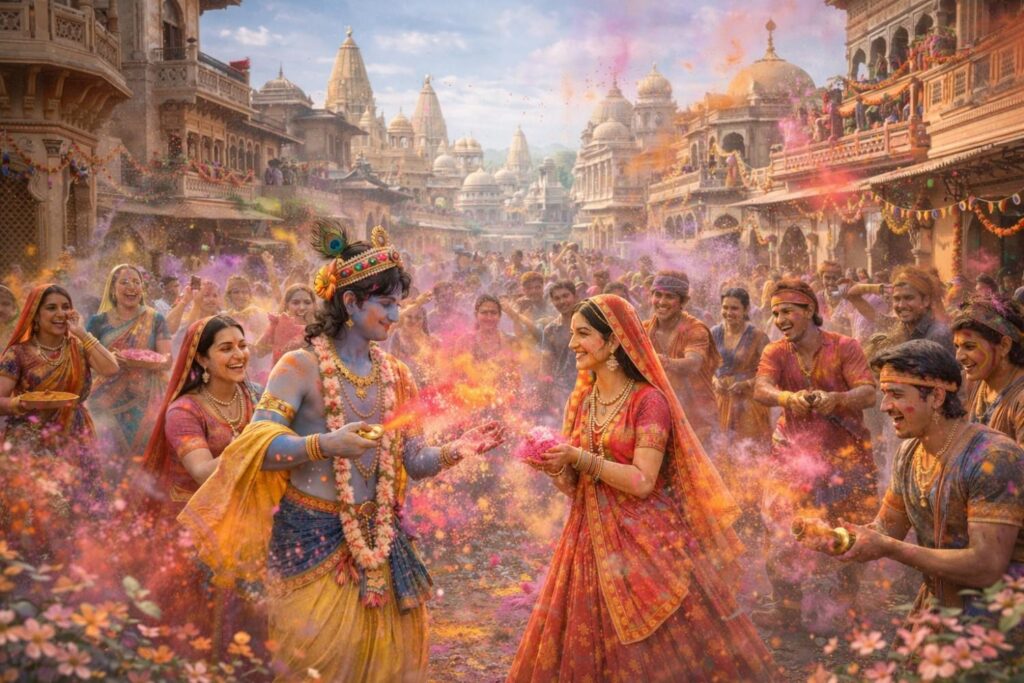
The Metaphysical Science of Holi: Scriptural Insights and Cosmic Significance
In the framework of Sanatan Dharma, no festival is accidental. Every celebration is intricately linked to celestial cycles, seasonal transitions, psychological purification, and spiritual evolution. The night of the Phalguna Purnima (Full Moon), popularly known as Holi, holds esoteric secrets that continue to intrigue modern researchers.
The study of Dharm Granth such as Atharva Veda Parishishta, Bhavishya Purana, and Narada Purana, reflects that Holi festival is far more profound and scientific than the folklore common in public discourse. This festival represents a rare convergence of elemental fire, lunar influence, devotion, asceticism, and public health.
Atharva Veda Parishishta : Seasonal Transition and Atmospheric Purification
Atharva Veda Parishishta (Chapters 1.1.2 and 72.4.6-7) reveals that Holi marks a celestial ‘Ritu-Sandhi’—the junction where two seasons meet. The calculation of the ‘Phalguni’ constellation during this period is considered highly sensitive.
Navadanyashti Ritual: The scriptures describe a rite called Navadanyashti, where the lighting of the fire is not merely symbolic. Neutralizing Pathogens: During seasonal shifts, microscopic organisms (referred to in ancient times as ‘Raksha’ or invisible enemies) tend to proliferate. The ritual burning of specific medicinal woods, such as Neem and Palash, serves as a communal fumigation process.
Internal Detoxification: The tradition of consuming ‘Holak’ (grains parched in the sacred fire) is an ancient method used to purify the blood. Modern science is beginning to understand these practices as sophisticated forms of environmental purification.
The Lunar Influence and Psychological Balance
In the Jaimini Purvamimamsa, the full moon is personified as ‘Raka’, the Goddess of Completion.
Elemental Synergy: Holi creates a balance between Agni (Fire), which represents purification, and the Moon, which represents nourishment.
Mental Equilibrium: The gravitational and energetic pull of the full moon influences tides, biological fluids, and human emotions. The rituals of Holi are designed to stabilize the mind during this peak emotional period.
3. The Legend of Prahlada: A Study in Consciousness
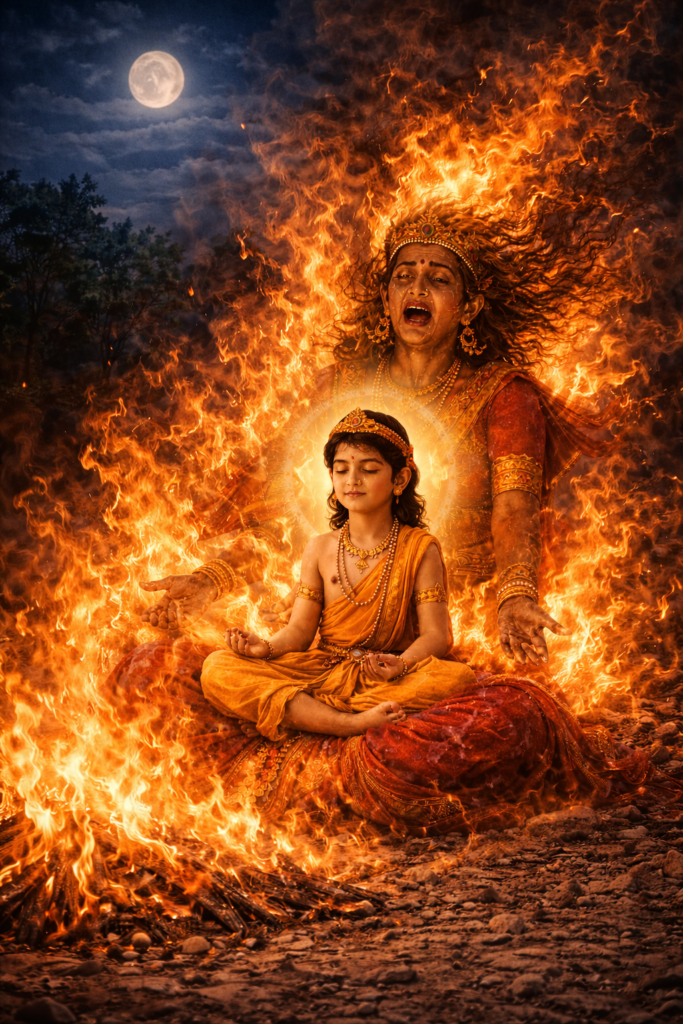
While the story of Prahlada from the Bhagavat Purana is well-known, its spiritual depth is often overlooked.
Purity Over Power: Holika possessed a boon of invincibility against fire, yet she was consumed while the devout Prahlada remained untouched. This symbolizes that natural elements respond to the purity of one’s internal consciousness.
The Internal Fire: External power and authority are ineffective if the internal state is compromised. Prahlada represents unwavering devotion, while Holika represents the deceit of ego. The annual bonfire serves as a reminder to incinerate one’s internal arrogance.
The ‘Dhundha’ Tradition: Sound Therapy and Collective Joy
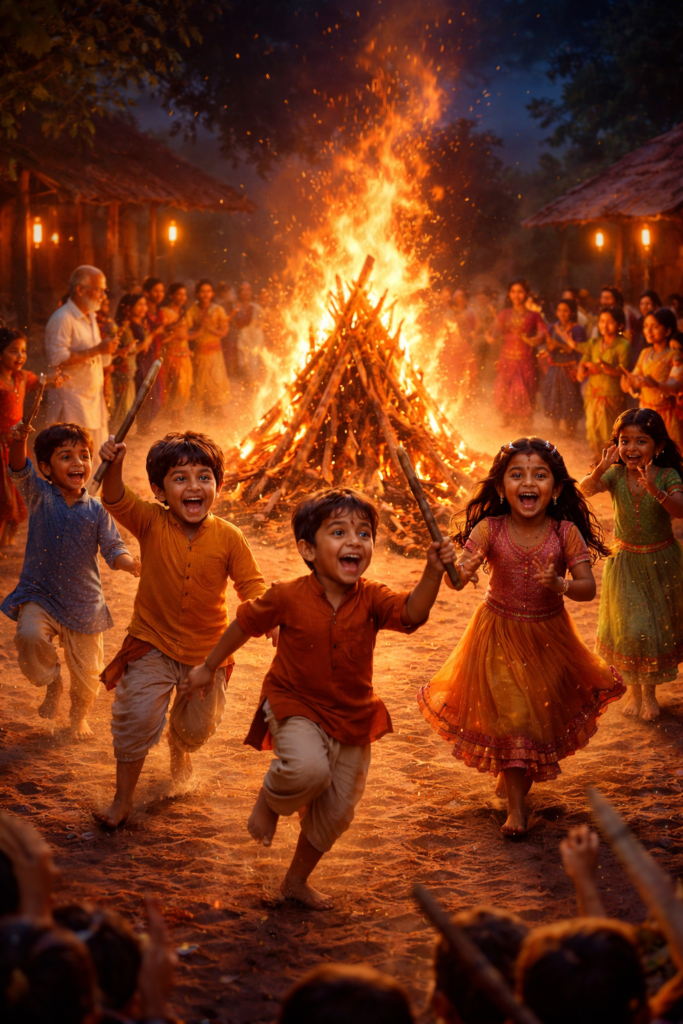
The Bhavishya Purana describes a demoness named ‘Dhundha’ (symbolizing mist, infection, or invisible disease) who troubled children during seasonal shifts.
The Power of Sound: Sage Vashistha advised King Raghu that Dhundha could not be defeated by weapons, but by a collective ritual.
Cultural “Hurdang”: The tradition of loud laughter, singing, rhythmic clapping, and the enthusiastic shouting of children during Holi is a scriptural mandate.
Psychological Therapy: These high-energy sounds and communal joy act as a cultural deterrent against negative energies and psychological stagnation.
5. The Alchemy of Colors: Divine Oneness in Garga Samhita
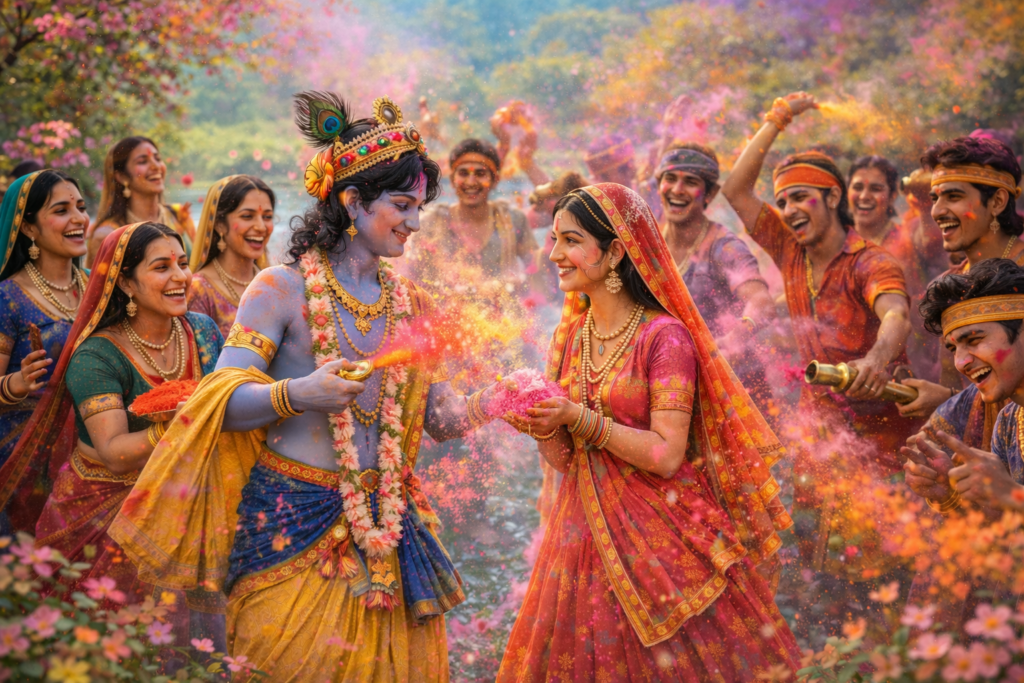
In the Garga Samhita, the Holi-Utsav of Shri Radha-Krishna and the Gopis is described not as a worldly pastime, but as the highest expression of devotion.
Expressions of Love: The playing with colors amidst the fragrance of spring represents the expression of divine love rather than mere entertainment.
Transcendental Joy: This color festival marks the state where the individual soul merges with the divine, signifying that once the internal ego is burned (Holi), the natural state of consciousness is pure bliss (Rangotsav).
Conclusion: A Grand Cosmic Reset
The scriptural mandates of Holi prove that ancient Sages understood the interdependent relationship between Nature, the Body, and the Cosmos—a reality that modern science is only beginning to grasp in fragments. Holi is not a mere cultural formality; it is an annual ‘Creation Cycle’ designed to rejuvenate the biosphere and human consciousness.
Communal Responsibility: Like personal hygiene, environmental purification through medicinal fire is a collective social duty.
Sound and Stability: The communal joy and laughter serve as a therapeutic “reset” for a stressed society, linking the individual to the collective consciousness.
The Law of Ethics: Power and technology are only beneficial when bound by the limits of Dharma (Ethics). Power without morality eventually destroys itself, as evidenced by the end of Holika.
Scriptural References
- Srimad Bhagavat Mahapurana: Canto 7, Chapters 5–10 (Prahlada Charitra); Canto 10, Chapter 30.
- Bhavishya Purana: Festival section regarding the Dhundha narrativ
- Atharva Veda Parishishta: Sections regarding Holaka and Navadanyashti.
- Garga Samhita: Krishna-Khanda (Description of Vasantotsav/Holi).
- Narada Purana: Purva Bhaga, Chapter 124.
- Shiva Purana: Narrative of Kamadeva-Dahan.